








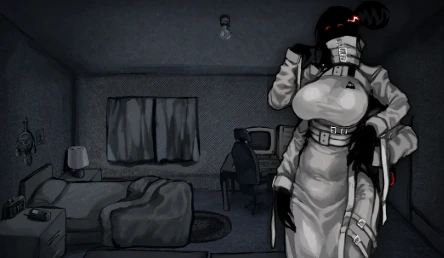

















Home
Helping Your Boyfriend
A Spoiler-Conscious Reading of Care and Control
Jump to the play area, read the introduction, and open the FAQ for this browser horror game page.
Gameplay Videos
Helping Your Boyfriend: When an Ordinary Favor Becomes a Question
Helping Your Boyfriend is a horror romance visual novel by Zieelane and Mousefishdog. Its starting point is intimate rather than spectacular: you live with Adrian, your doctor boyfriend, while a condition affecting your legs leaves you unable to walk. That arrangement makes care a daily reality rather than an abstract promise. Someone helps, someone depends on that help, and ordinary conversations acquire additional weight because practical choices are not equally available to both people. The interesting question is not simply whether a character looks friendly. It is what being helpful permits that character to decide on somebody else's behalf.
The premise moves into a sleepless domestic night, work dismantling Adrian's old dolls, and a stranger who threatens you while demanding that you take a pill. These elements should be understood as the opening conditions for uncertainty, not as proof of one solved explanation. This guide discusses how to read the tension without supplying a fabricated sequence of correct answers. The embedded game is a browser presentation; it has not been play-tested for this guide, and its available features should not be assumed identical to every official release. Read the warnings before pressing Play, especially if the gentle colors suggest a conventional comfort romance.

Read the Household as a Relationship, Not a Puzzle Code
A useful first reading separates three things: what you directly see, what another character tells you, and what you currently suspect. A doctor saying something reassuring belongs in the second category until the surrounding scene supports it. A frightening interruption is an event, but the visitor's account of that event remains an account. Keeping those distinctions clear prevents the story from becoming a contest to label everyone innocent or guilty before they have finished speaking. It also makes later revisions of your opinion more satisfying, because you can identify which detail changed your mind.
Pay attention to how requests are framed. Does a conversation offer a reason, ask permission, or present obedience as the only caring response? These are reading questions rather than secret mechanics. There is no basis here for claiming that noticing a particular sentence raises an invisible trust meter. Instead, observe the emotional work done by everyday language. A request to help with old dolls can simultaneously be a mundane task, a moment of closeness, and a way of redirecting attention. Those possibilities create interpretive tension without requiring an invented explanation for the dolls themselves.
Getting Started With the Browser Game
Use the Play button above to request the embedded game, then click inside its frame before trying keyboard commands. The page and the game are separate interfaces: a key may scroll the surrounding website if the game does not have focus. Give the first load time to complete instead of repeatedly pressing the launch button. If the game presents its own start screen, use that screen to begin a new session. The site's fullscreen control changes the viewing area; it does not establish that the game has saved or that a scene is safe to interrupt.
Before continuing far, locate the bell at the top of the game interface. The supplied control information identifies this as the route to saving, loading, and settings. Check the actual options visible in your session rather than relying on screenshots from a different release. If a save can be created, make an early test save and verify that it appears in the load menu. Avoid assuming that browser data survives private browsing, clearing site storage, or moving to another device. A visible save slot is more useful evidence than simply leaving the tab open.
Controls That Keep the Reading Pace Under Your Control
Click or press Enter to advance dialogue. Space hides the dialogue interface, which can help you inspect an illustration without the text box covering it. L opens the dialogue history, and A enables automatic advance. Ctrl or Tab is used for skipping. Treat these as the supplied controls, with the running build's own instructions taking priority if they differ. In a story whose meaning can change through a short qualification or an uneasy pause, manual advance is a sensible starting point. Automatic reading becomes more comfortable after you know the pacing and have checked any available settings.
The interactive sequences introduce a different rhythm. Mouse dragging is used for minigames, while quick-time prompts use directional input and Space. Read each prompt before moving; the same key can have a different purpose in a timed scene than in ordinary dialogue. Keep your pointer within the game frame during a drag and release deliberately at the intended target. If an input seems ignored, first check focus and the current instruction rather than assuming a route has broken. This is practical input advice, not a tested solution for every minigame or a promise that all touchscreens support the same actions.
Why the Nighttime Setting Changes the Meaning of the Room
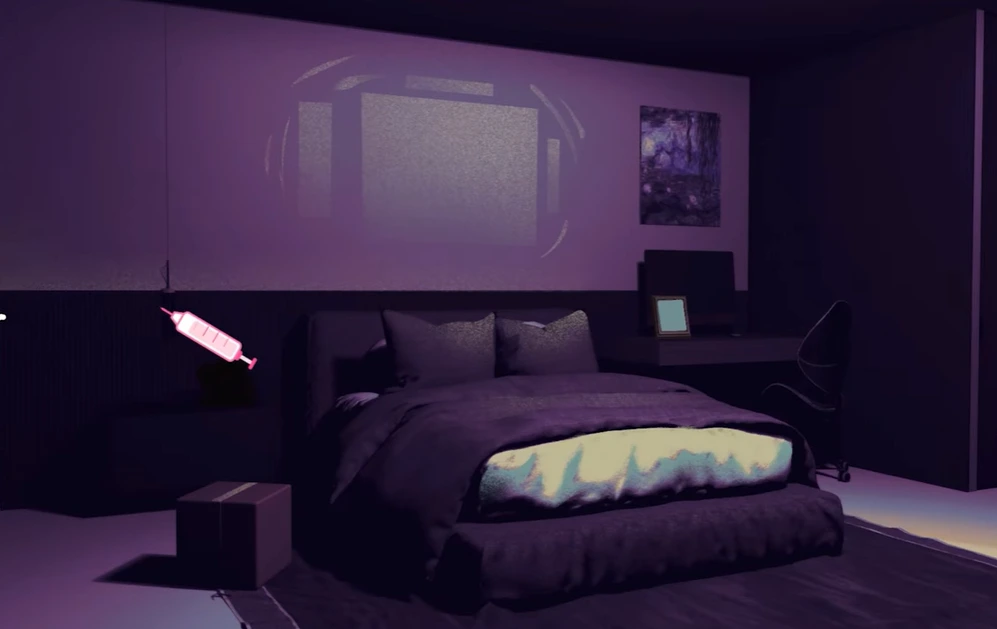
The domestic setting matters because a familiar room normally suggests a known routine. Waking during the night interrupts that routine without necessarily changing the furniture. A bed, a doorway, and a place to sit can become points of uncertainty when the people associated with them are unavailable or difficult to interpret. The supplied bedroom image shows a darkened sleeping area with a desk and chair nearby. It illustrates a change in atmosphere; it does not establish an ending, a hidden route, or the precise moment at which a player should act.
For a more attentive playthrough, notice when your own expectations change. Did the threat come from something visible, from a line of dialogue, or from information withheld? The distinction is especially useful in a visual novel, where the camera can keep you looking at one familiar composition while the conversation alters its significance. Resist the urge to treat every background object as a clickable clue. Unless the interface invites exploration, the important action may be listening. Reading the room means considering its context, not hunting for an undocumented interaction behind every decoration.
Choices, Four Endings, and a Careful Approach to Replay
The official feature description lists four endings and five minigames, along with customization for the protagonist's name, pronouns, and body type. Those are descriptions of the official game, not confirmation that this particular browser host exposes every feature in the same form. Customization lets a player shape the presentation of the protagonist, but it should not be advertised as a guaranteed method for opening a specific ending. No verified ending recipe is supplied here. A guide is more trustworthy when it admits where its evidence stops than when it converts plausible guesses into instructions.
For a second reading, preserve an earlier save if the current build allows it and change one meaningful decision at a time. Make a short note of the scene, the choice you selected, and what happened afterward. Record observations before adding an explanation. If several choices change together, you cannot reliably tell which one produced a different response. Stop skipping as soon as unfamiliar dialogue appears, and use history to compare wording where available. This approach supports your own understanding without pretending that the story follows a simple arithmetic system or that one ending is objectively the correct way to experience it.
Threats, Care, and the Limits of What a Screenshot Can Tell You
The stranger's demand involving medicine creates a conflict between pressure, uncertainty, and responsibility. It is a fictional threat within a horror story, not a practical lesson in treatment or a reason to generalize about doctors. Likewise, the protagonist's inability to walk is part of the stated situation, not a moral failure or an invitation to equate disability with helplessness in every sense. A reader can ask who has access to information, who can leave a room, and who gets believed without reducing the protagonist to a device for another character's development.
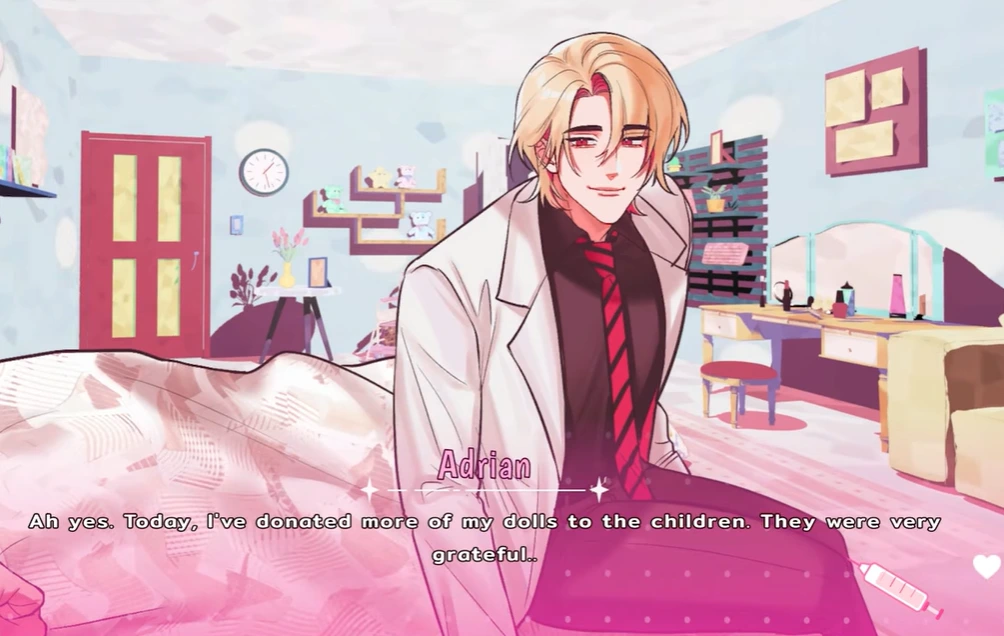
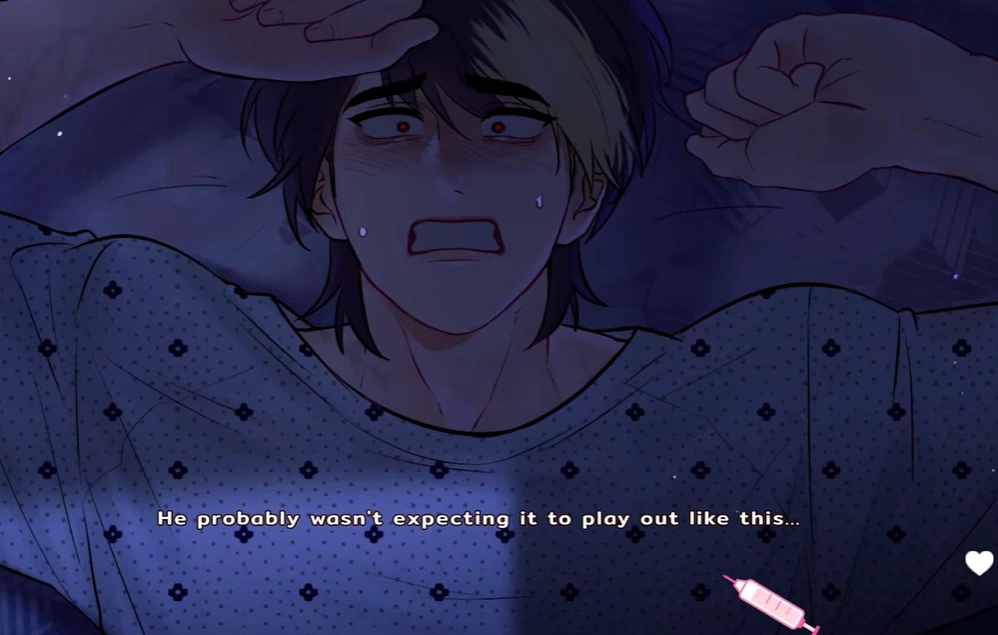
One supplied image shows a distressed figure lying back with raised arms under blue lighting. An isolated image can establish expression and composition, but not the choices that led there. We include it as a visual example of the tonal distance between affectionate presentation and fear, without naming an ending or inventing a causal chain. The separate illustrated cover is branding rather than gameplay evidence. Making that distinction leaves room for the actual scenes to surprise you and avoids spoiling the experience with conclusions that the available material cannot support.
Warnings, Videos, and Troubleshooting Without Losing Your Place
Content warnings include violence, blood and gore, flashing imagery, jump scares, and toxic relationship themes. These warnings remain relevant even when a scene looks pastel or romantic. You do not need to finish a route to justify stopping. If abrupt visual effects or coercive dialogue are uncomfortable, pause before continuing; do not assume an unverified settings option can remove them. The two videos on this page provide additional material to watch, but they may reveal events beyond your current scene. Avoid playing both simultaneously, and consider leaving them until after your first uninterrupted reading.
If the frame remains blank, wait briefly and then check whether the embedded host is blocked by your browser or network. Reloading may discard unsaved progress, so distinguish a loading problem from a slow scene before refreshing. Audio may need a deliberate click inside the game. On a phone, landscape orientation can provide more room, but mouse dragging and keyboard quick-time prompts make a keyboard-and-pointer setup the clearer reference point. Mobile parity is not confirmed here. If a video fails independently, that does not prove the game is unavailable: the videos and game are served by different hosts.
Helping Your Boyfriend FAQ
What is Helping Your Boyfriend about?
It is a horror romance visual novel about living with Adrian, a doctor boyfriend, while the protagonist cannot walk because of a leg condition. Nighttime events, old dolls, and a threatening stranger complicate that domestic situation.
Who created the game?
The game is by Zieelane and Mousefishdog, two collaborators. This page is an independent guide and browser entry, not a claim of official authorship.
How do I advance or reread dialogue?
Use click or Enter to advance and L for history. Space hides dialogue, A enables auto advance, and Ctrl or Tab skips. Follow the running game's prompts if a mapping differs.
What do the minigames use?
The supplied controls include mouse dragging and directional keys with Space for quick-time prompts. Read the current instruction before acting rather than applying dialogue controls to every interaction.
Are there four endings in this browser version?
Four endings and five minigames are officially described features. This browser presentation has not been verified for complete feature parity, so their availability here is not guaranteed.
Can I change the protagonist?
The official feature list includes a name, pronouns, and body-type options. Inspect the current build's setup screen for what is actually offered; no ending effect is asserted for these choices.
Where are save and load controls?
The supplied interface guidance points to the bell at the top for save, load, and settings. Verify a save slot in your own session before closing or refreshing the tab.
Is this a gentle dating game?
No. Romantic imagery accompanies horror involving violence, blood, flashes, jump scares, and toxic relationship themes. Review those warnings before deciding to play.
Does the guide reveal exact ending choices?
No. It offers a spoiler-conscious method for observing choices and comparing replays, without inventing ending names, hidden conditions, or a tested walkthrough.