











Home
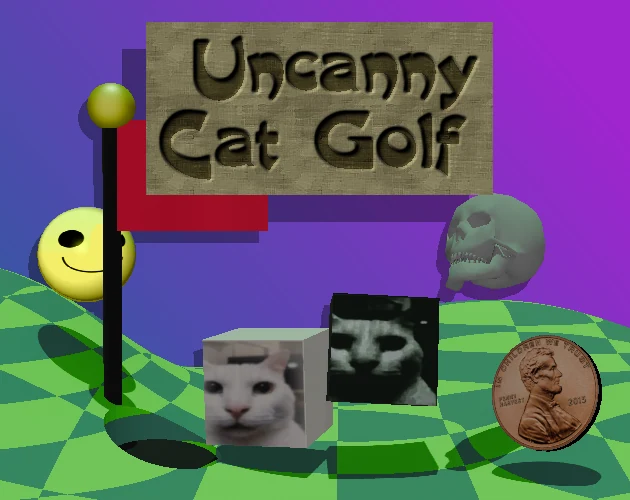
Uncanny Cat Golf
Uncanny Cat Golf: Finding Clean Geometry Inside the Joke
Jump to the play area, read the introduction, and open the FAQ for this browser horror game page.
Gameplay Videos
Treat the Course Like a Motion Diagram
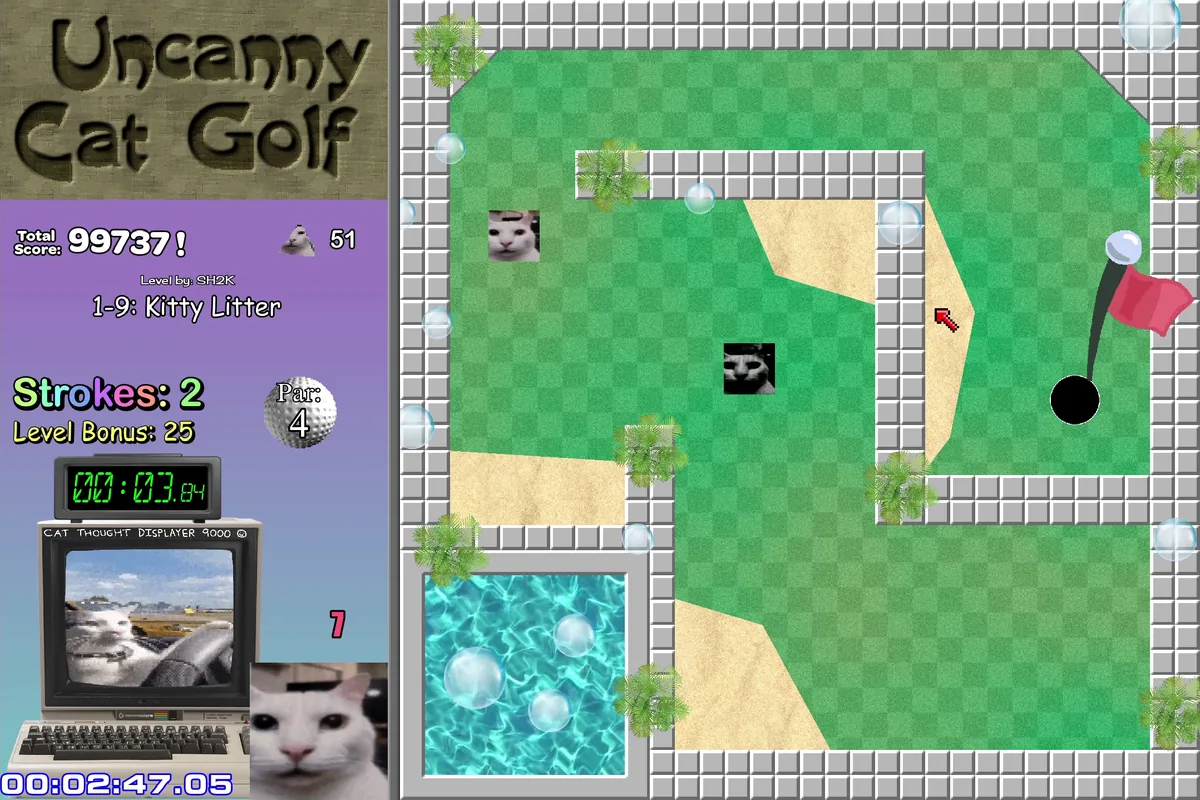
Uncanny Cat Golf turns the complete lane, including the tee, cup, walls, water, sand, moving props, and the safest open stopping areas into the real puzzle beneath its absurd presentation. Top-down fairways combine walls, sand, water, narrow gates, moving props, score panels, and reaction-image scenery that makes sensible routes look suspicious. The square cat may make every collision look like a joke, but its final position still follows a readable relationship between direction, force, momentum, and contact. A useful player separates the decoration that creates mood from the geometry that changes the shot. That distinction makes a crowded hole calmer without draining away the strange personality that makes the course memorable.
A dependable Cobb approach is to trace a clean route from the cat to a generous landing zone before deciding how hard to shoot. Do not begin by asking whether a hole-in-one is technically possible. Begin by asking where the cat can stop with a wide view of the cup and little exposure to water, sand, or awkward corners. Controlled power keeps more of the intended line intact and makes wall rebounds easier to compare. When a shot fails, name the cause as angle, force, collision, hazard, or poor stopping position instead of treating the whole attempt as random.
The longer strategy is Replay one difficult hole and trade a heroic shortcut for a measured bank followed by a clean finishing putt. Keep the successful parts of the route stable while testing one deliberate adjustment. Score then becomes a record of decisions: an extra stroke often points to an opening line that created recovery work later. the shortest visible line is often less reliable than a calm setup shot because loud props and tight hazards punish unplanned speed. Reading that tension helps players improve without copying a walkthrough, because every replay answers a specific question about space. The goal is not to remove surprise but to build a reliable route through it.
Angle Before Power
This surreal mini-golf game turns how a small directional error grows as the cat travels farther and meets more obstacles into the real puzzle beneath its absurd presentation. Top-down fairways combine walls, sand, water, narrow gates, moving props, score panels, and reaction-image scenery that makes sensible routes look suspicious. The square cat may make every collision look like a joke, but its final position still follows a readable relationship between direction, force, momentum, and contact. A useful player separates the decoration that creates mood from the geometry that changes the shot. That distinction makes a crowded hole calmer without draining away the strange personality that makes the course memorable.
A dependable Cobb approach is to reduce force until the intended line remains visible and repeatable rather than dramatic. Do not begin by asking whether a hole-in-one is technically possible. Begin by asking where the cat can stop with a wide view of the cup and little exposure to water, sand, or awkward corners. Controlled power keeps more of the intended line intact and makes wall rebounds easier to compare. When a shot fails, name the cause as angle, force, collision, hazard, or poor stopping position instead of treating the whole attempt as random.
The longer strategy is Replay one difficult hole and trade a heroic shortcut for a measured bank followed by a clean finishing putt. Keep the successful parts of the route stable while testing one deliberate adjustment. Score then becomes a record of decisions: an extra stroke often points to an opening line that created recovery work later. the shortest visible line is often less reliable than a calm setup shot because loud props and tight hazards punish unplanned speed. Reading that tension helps players improve without copying a walkthrough, because every replay answers a specific question about space. The goal is not to remove surprise but to build a reliable route through it.
Bank Shots Without Guesswork
This surreal mini-golf game turns broad flat walls as predictable tools that can redirect the cat through a blocked gate into the real puzzle beneath its absurd presentation. Top-down fairways combine walls, sand, water, narrow gates, moving props, score panels, and reaction-image scenery that makes sensible routes look suspicious. The square cat may make every collision look like a joke, but its final position still follows a readable relationship between direction, force, momentum, and contact. A useful player separates the decoration that creates mood from the geometry that changes the shot. That distinction makes a crowded hole calmer without draining away the strange personality that makes the course memorable.
A dependable Cobb approach is to compare the incoming line with the reflected line and avoid tiny decorative edges. Do not begin by asking whether a hole-in-one is technically possible. Begin by asking where the cat can stop with a wide view of the cup and little exposure to water, sand, or awkward corners. Controlled power keeps more of the intended line intact and makes wall rebounds easier to compare. When a shot fails, name the cause as angle, force, collision, hazard, or poor stopping position instead of treating the whole attempt as random.
The longer strategy is Replay one difficult hole and trade a heroic shortcut for a measured bank followed by a clean finishing putt. Keep the successful parts of the route stable while testing one deliberate adjustment. Score then becomes a record of decisions: an extra stroke often points to an opening line that created recovery work later. the shortest visible line is often less reliable than a calm setup shot because loud props and tight hazards punish unplanned speed. Reading that tension helps players improve without copying a walkthrough, because every replay answers a specific question about space. The goal is not to remove surprise but to build a reliable route through it.
Hazards Change the Next Stroke
This surreal mini-golf game turns water, sand, narrow corners, clutter, and moving objects as costs that extend beyond one failed attempt into the real puzzle beneath its absurd presentation. Top-down fairways combine walls, sand, water, narrow gates, moving props, score panels, and reaction-image scenery that makes sensible routes look suspicious. The square cat may make every collision look like a joke, but its final position still follows a readable relationship between direction, force, momentum, and contact. A useful player separates the decoration that creates mood from the geometry that changes the shot. That distinction makes a crowded hole calmer without draining away the strange personality that makes the course memorable.
A dependable Cobb approach is to choose a safe miss that preserves an open recovery instead of gambling beside a severe hazard. Do not begin by asking whether a hole-in-one is technically possible. Begin by asking where the cat can stop with a wide view of the cup and little exposure to water, sand, or awkward corners. Controlled power keeps more of the intended line intact and makes wall rebounds easier to compare. When a shot fails, name the cause as angle, force, collision, hazard, or poor stopping position instead of treating the whole attempt as random.
The longer strategy is Replay one difficult hole and trade a heroic shortcut for a measured bank followed by a clean finishing putt. Keep the successful parts of the route stable while testing one deliberate adjustment. Score then becomes a record of decisions: an extra stroke often points to an opening line that created recovery work later. the shortest visible line is often less reliable than a calm setup shot because loud props and tight hazards punish unplanned speed. Reading that tension helps players improve without copying a walkthrough, because every replay answers a specific question about space. The goal is not to remove surprise but to build a reliable route through it.
Par Is a Planning Prompt
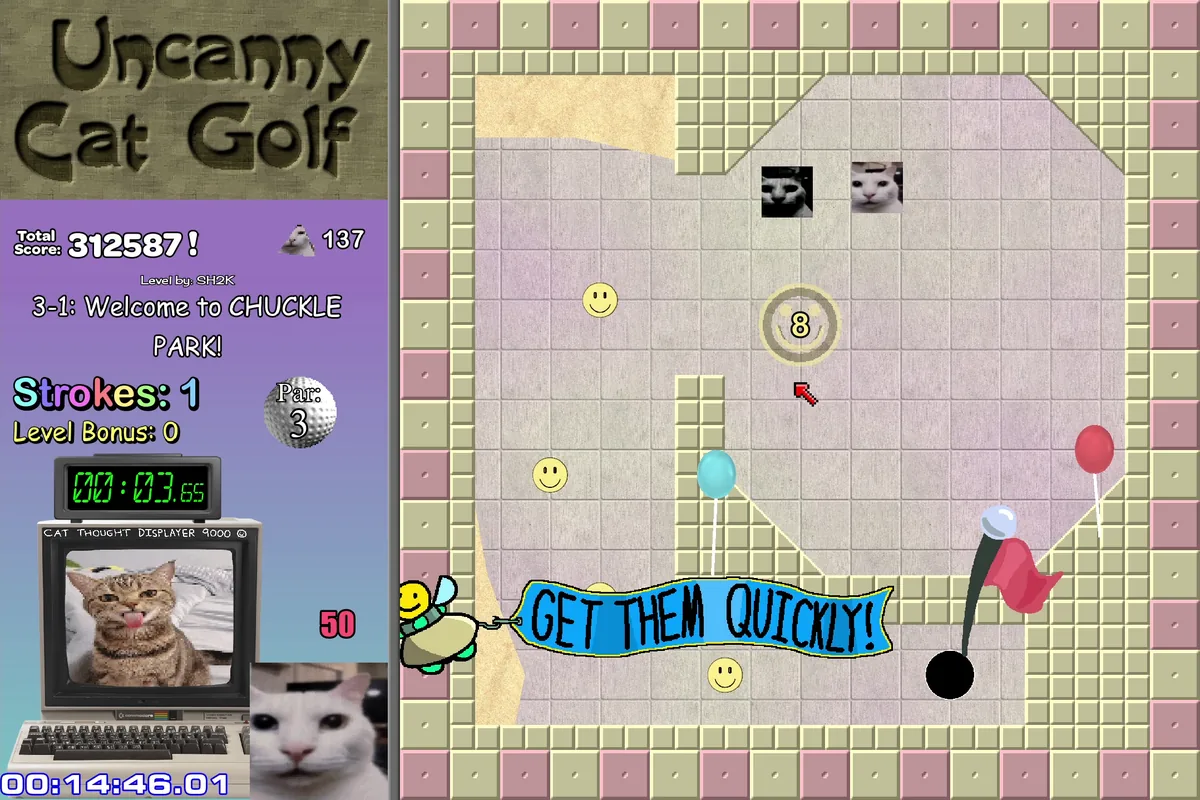
This surreal mini-golf game turns the scorecard as feedback about route efficiency rather than a demand for perfection on the first visit into the real puzzle beneath its absurd presentation. Top-down fairways combine walls, sand, water, narrow gates, moving props, score panels, and reaction-image scenery that makes sensible routes look suspicious. The square cat may make every collision look like a joke, but its final position still follows a readable relationship between direction, force, momentum, and contact. A useful player separates the decoration that creates mood from the geometry that changes the shot. That distinction makes a crowded hole calmer without draining away the strange personality that makes the course memorable.
A dependable Cobb approach is to compare where extra strokes began and revise only that part of the hole. Do not begin by asking whether a hole-in-one is technically possible. Begin by asking where the cat can stop with a wide view of the cup and little exposure to water, sand, or awkward corners. Controlled power keeps more of the intended line intact and makes wall rebounds easier to compare. When a shot fails, name the cause as angle, force, collision, hazard, or poor stopping position instead of treating the whole attempt as random.
The longer strategy is Replay one difficult hole and trade a heroic shortcut for a measured bank followed by a clean finishing putt. Keep the successful parts of the route stable while testing one deliberate adjustment. Score then becomes a record of decisions: an extra stroke often points to an opening line that created recovery work later. the shortest visible line is often less reliable than a calm setup shot because loud props and tight hazards punish unplanned speed. Reading that tension helps players improve without copying a walkthrough, because every replay answers a specific question about space. The goal is not to remove surprise but to build a reliable route through it.
Visual Noise Versus Useful Information
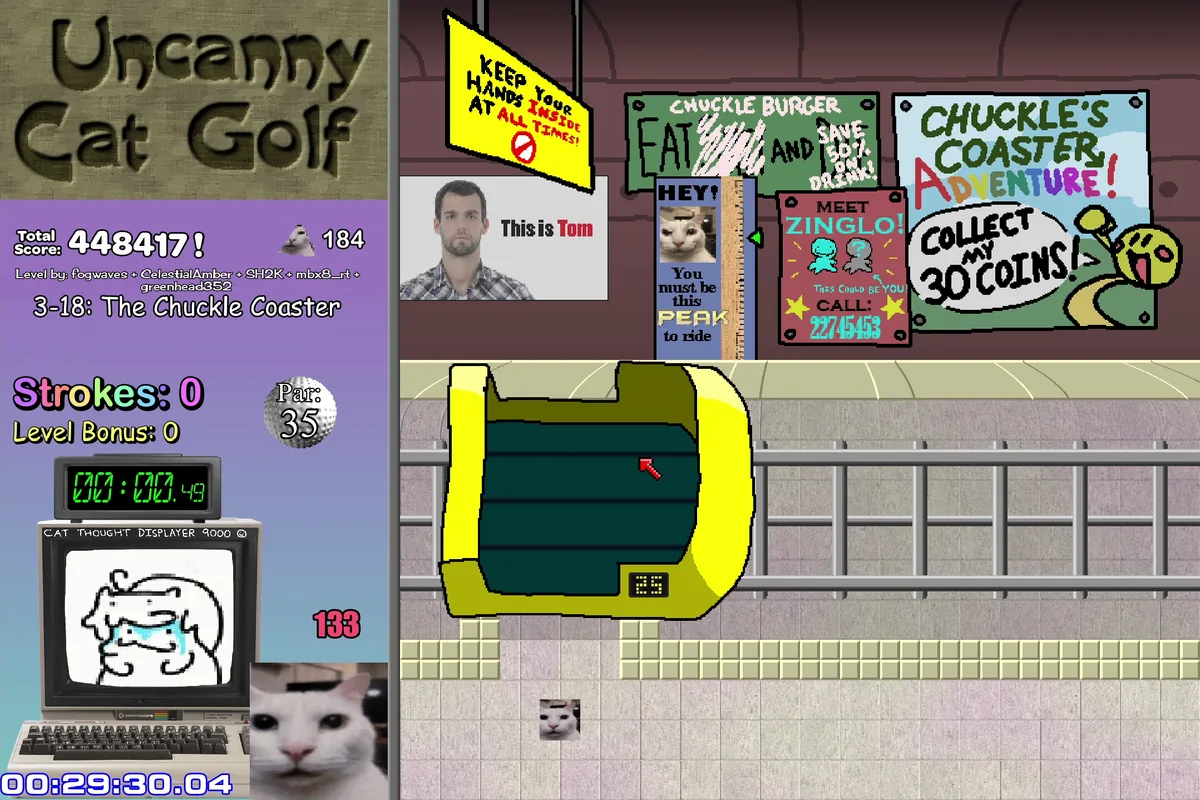
This surreal mini-golf game turns the square cat, uncanny faces, meme props, and collage backgrounds competing with the surfaces that control movement into the real puzzle beneath its absurd presentation. Top-down fairways combine walls, sand, water, narrow gates, moving props, score panels, and reaction-image scenery that makes sensible routes look suspicious. The square cat may make every collision look like a joke, but its final position still follows a readable relationship between direction, force, momentum, and contact. A useful player separates the decoration that creates mood from the geometry that changes the shot. That distinction makes a crowded hole calmer without draining away the strange personality that makes the course memorable.
A dependable Cobb approach is to identify boundaries and hazards first, then enjoy decoration after the route is understood. Do not begin by asking whether a hole-in-one is technically possible. Begin by asking where the cat can stop with a wide view of the cup and little exposure to water, sand, or awkward corners. Controlled power keeps more of the intended line intact and makes wall rebounds easier to compare. When a shot fails, name the cause as angle, force, collision, hazard, or poor stopping position instead of treating the whole attempt as random.
The longer strategy is Replay one difficult hole and trade a heroic shortcut for a measured bank followed by a clean finishing putt. Keep the successful parts of the route stable while testing one deliberate adjustment. Score then becomes a record of decisions: an extra stroke often points to an opening line that created recovery work later. the shortest visible line is often less reliable than a calm setup shot because loud props and tight hazards punish unplanned speed. Reading that tension helps players improve without copying a walkthrough, because every replay answers a specific question about space. The goal is not to remove surprise but to build a reliable route through it.
A Controlled Replay Method
This surreal mini-golf game turns repetition as a way to separate an angle problem from a power problem into the real puzzle beneath its absurd presentation. Top-down fairways combine walls, sand, water, narrow gates, moving props, score panels, and reaction-image scenery that makes sensible routes look suspicious. The square cat may make every collision look like a joke, but its final position still follows a readable relationship between direction, force, momentum, and contact. A useful player separates the decoration that creates mood from the geometry that changes the shot. That distinction makes a crowded hole calmer without draining away the strange personality that makes the course memorable.
A dependable Cobb approach is to change one variable on the opening stroke while preserving the rest of the plan. Do not begin by asking whether a hole-in-one is technically possible. Begin by asking where the cat can stop with a wide view of the cup and little exposure to water, sand, or awkward corners. Controlled power keeps more of the intended line intact and makes wall rebounds easier to compare. When a shot fails, name the cause as angle, force, collision, hazard, or poor stopping position instead of treating the whole attempt as random.
The longer strategy is Replay one difficult hole and trade a heroic shortcut for a measured bank followed by a clean finishing putt. Keep the successful parts of the route stable while testing one deliberate adjustment. Score then becomes a record of decisions: an extra stroke often points to an opening line that created recovery work later. the shortest visible line is often less reliable than a calm setup shot because loud props and tight hazards punish unplanned speed. Reading that tension helps players improve without copying a walkthrough, because every replay answers a specific question about space. The goal is not to remove surprise but to build a reliable route through it.
Browser Setup and Comfortable Play
This surreal mini-golf game turns iframe loading, input focus, fullscreen, mobile aiming, local progress, and flashing imagery into the real puzzle beneath its absurd presentation. Top-down fairways combine walls, sand, water, narrow gates, moving props, score panels, and reaction-image scenery that makes sensible routes look suspicious. The square cat may make every collision look like a joke, but its final position still follows a readable relationship between direction, force, momentum, and contact. A useful player separates the decoration that creates mood from the geometry that changes the shot. That distinction makes a crowded hole calmer without draining away the strange personality that makes the course memorable.
A dependable Cobb approach is to wait for remote assets, click inside the frame, use landscape on mobile, and take breaks when needed. Do not begin by asking whether a hole-in-one is technically possible. Begin by asking where the cat can stop with a wide view of the cup and little exposure to water, sand, or awkward corners. Controlled power keeps more of the intended line intact and makes wall rebounds easier to compare. When a shot fails, name the cause as angle, force, collision, hazard, or poor stopping position instead of treating the whole attempt as random.
The longer strategy is Replay one difficult hole and trade a heroic shortcut for a measured bank followed by a clean finishing putt. Keep the successful parts of the route stable while testing one deliberate adjustment. Score then becomes a record of decisions: an extra stroke often points to an opening line that created recovery work later. the shortest visible line is often less reliable than a calm setup shot because loud props and tight hazards punish unplanned speed. Reading that tension helps players improve without copying a walkthrough, because every replay answers a specific question about space. The goal is not to remove surprise but to build a reliable route through it.
Uncanny Cat Golf FAQ
What is Uncanny Cat Golf?
Uncanny Cat Golf is a comic browser mini-golf game where a square cat becomes the ball and every course mixes readable geometry with deliberately strange internet collage.
Can I play Uncanny Cat Golf online?
Yes. Press Play above to launch the embedded browser edition without installing a separate package.
How do I aim the square cat?
Use the pointer or trackpad to set direction and force, then release the shot after checking walls, hazards, and the desired stopping area.
What is the best beginner strategy?
Plan a safe two-shot route, use controlled power, and protect the next angle instead of forcing every possible shortcut.
Can walls help with difficult holes?
Yes. Broad flat walls provide the clearest bank shots when a direct lane is blocked.
How should I improve a high score?
Replay one troublesome hole and change only the opening angle or force so the result remains easy to compare.
Does the browser game work on mobile?
It may work in a modern mobile browser, though landscape mode and desktop fullscreen make precise aiming easier.
Why is the game frame blank?
Wait for remote assets, click inside the frame, refresh once, and check extensions or networks that block the external host.
Is Uncanny Cat Golf graphic?
No graphic content appears in the supplied artwork. The game uses flashing meme-style images, uncanny faces, and absurd visual humor, though the supplied public artwork is not graphic.